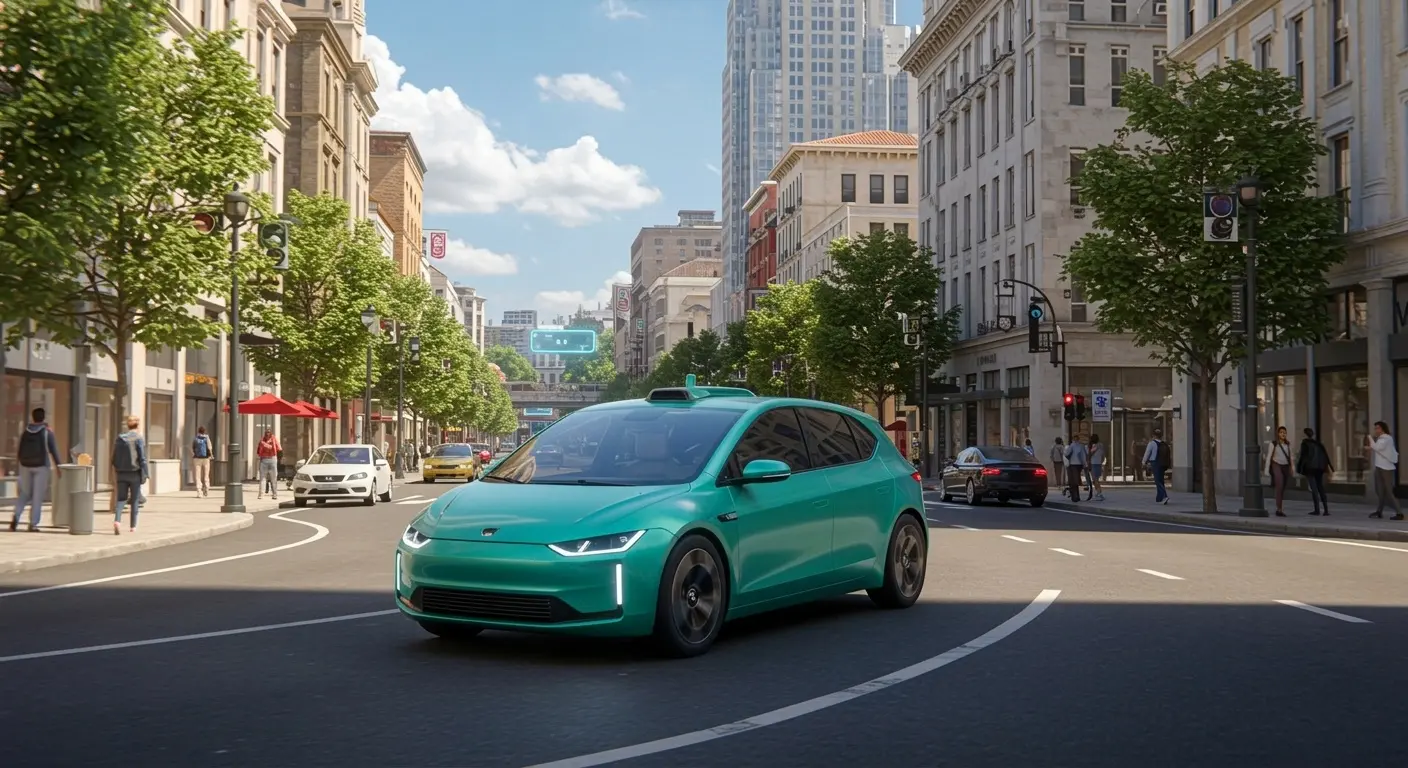

Software-defined vehicles have moved off the roadmap and onto the production line. For OEMs, the question in 2026 is how to build a car that keeps improving long after it leaves the factory.
The appetite is clear. Research from IoT Analytics found that 45% of automotive OEMs and suppliers now rank the move to SDVs as their top strategic priority, ahead of both autonomous driving and electrification. The harder part is execution. Budgets are tighter than the original roadmaps assumed, and every new software feature depends on a connection that has to work in every market you sell into.
This guide covers what the shift means for vehicle architecture, how leading OEMs are approaching it, and answers to the questions product and engineering teams ask most often.
What software-defined vehicles mean for OEMs
A software-first approach to the whole vehicle
A software-defined vehicle is one where core functions such as driver assistance, infotainment and body control are defined mainly by software instead of being fixed in hardware when the car is built.
That changes the economics of the car. A vehicle can gain features, fix faults and strengthen its safety systems years after sale. Your relationship with the driver no longer ends at the dealership, and neither does your revenue.
Zonal architecture and centralised computing
Traditional vehicles run on dozens of separate electronic control units, each with its own software and often its own supplier. Software-defined designs consolidate that into a small number of high-performance computers, with zonal controllers handling the physical connections in each area of the car.
The result is less wiring, less weight and a single software platform you can update as a whole. Tesla, Rivian and BYD are the examples most often cited as early adopters of zonal designs. Established OEMs are now closing the gap through partnerships and platform consolidation.
Over-the-air updates across the vehicle lifecycle
OTA updates are how a software-defined vehicle improves after sale. They let you deploy new features, close security gaps and correct faults without a workshop visit.” title=”Over-the-air updates explained for connected vehicles”>OTA updates are how a software-defined vehicle improves after sale. They let you deploy new features, close security gaps and correct faults without a workshop visit.
The catch is trust. The 2026 SDV survey by Omdia found that vehicle reliability and safety have overtaken cybersecurity as the biggest barrier to OTA deployment. One failed update across a fleet costs more in brand damage than a feature that ships six months late.
How OEMs are investing in software-defined vehicles
From ambition to industrialisation
Writing after CES 2026, S&P Global Mobility analyst Vivek Beriwal concluded that SDVs had entered their industrialisation phase, with platforms now built for mass production and long-term OTA support.
The investment is following. The IBM Institute for Business Value expects software’s share of automotive R&D spending to rise from 21% today to 58% by 2035, and 74% of the executives it surveyed believe vehicles will be software-defined and AI-powered by then.
How three major OEMs are approaching it
Volkswagen Group took the partnership route. Its joint venture with Rivian is building a zonal architecture for the group’s SSP-based electric vehicles, targeting up to 30 million units. The ID.Every1 is due in 2027 as the first model to use it.
Stellantis chose consolidation. In May 2026 it launched STLAOne, which merges five previous platforms into one scalable architecture.
Ford is betting on compute efficiency. At CES 2026, Ford’s Doug Field said the company’s strategy centres on software-defined vehicles built around centralised computing, with Level 3 driver assistance planned for 2028.
Vehicle data is being put to work in-house
The early SDV pitch leaned heavily on selling vehicle data to third parties. That has cooled. Omdia’s 2026 research found automakers moving away from external data monetisation and towards using vehicle data internally to build their own capabilities.
The value of connected vehicle data now lies in better product decisions. Explore3 surfaces early adoption signals and usage behaviour, so your product teams can see which features drivers actually use and where they drop off.
Smart connectivity has to work first
Every OTA update, cloud service and feature on demand depends on a reliable connection wherever the car is sold. That sounds obvious until you ship one model into dozens of countries, each with its own networks and regulations.
Global eSIM management lets you build a single hardware variant and localise connectivity after production. Cubic3 connects vehicles in more than 200 countries through 550+ mobile networks, and DriverConnect3 removes activation friction at the point of delivery, so connected services work from the first drive.
Software-defined vehicles: OEM questions answered
What is a software-defined vehicle?
A software-defined vehicle is a car whose features and behaviour are controlled mainly by software, which can be updated remotely throughout its life. Its value to the driver can grow after purchase instead of declining from the day it is sold.
How is an SDV different from a connected car?
A connected car has a data link to the cloud. A software-defined vehicle uses that link to change how the car itself works, through updates to its core functions. Most SDVs are connected cars, but many connected cars on the road today are not software-defined.
Why do OEMs need over-the-air updates?
OTA updates let you fix faults, patch security vulnerabilities and add features without recalling vehicles to a workshop. They also extend the commercial life of each model, because new features can be sold to drivers who already own the car.
What is zonal architecture?
Zonal architecture groups a vehicle’s electronics by physical location instead of by function. Zonal controllers connect to nearby sensors and actuators, and report to a small number of central computers. It cuts wiring and makes the whole vehicle easier to update as one system.
What role does eSIM play in a software-defined vehicle?
An eSIM lets you assign or switch mobile network profiles remotely. You can build one hardware version for every market and set up local connectivity after the car is made, which keeps OTA updates and cloud services running across borders.
What are the biggest barriers for OEMs?
Update reliability and safety now top the list, according to Omdia. Budget pressure is close behind, along with the organisational change needed to run software teams at automotive scale. Cybersecurity remains a regulatory requirement under UNECE R155 in the markets that apply it.
How long does the transition take?
It varies widely. Volkswagen Group’s first vehicle on its joint-venture architecture arrives in 2027, while IBM’s research looks to 2035 for most vehicles to be software-defined. For most OEMs it is a multi-model, multi-year programme, so connectivity decisions made now will shape vehicles still on the road in the 2040s.