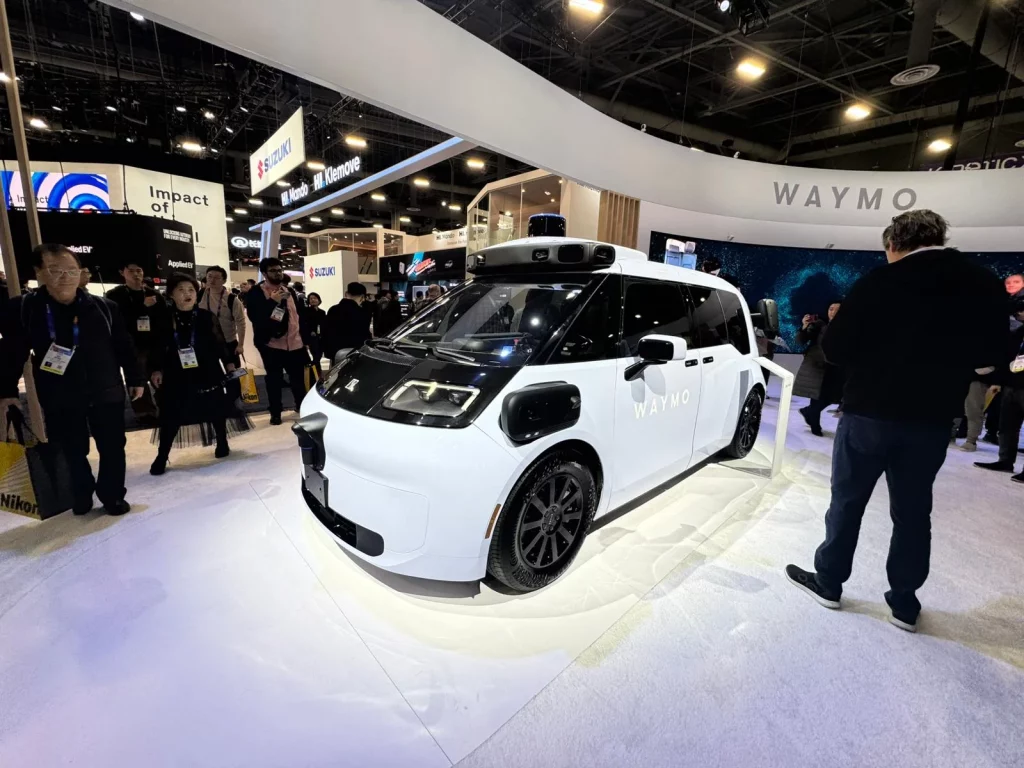
In the world of software-defined vehicles (SDVs), the robotaxi race is more important than we think. Often framed as a hardware arms race, brands like Waymo, Zoox, and Lucid are racing against each other to deliver the best sensors, vehicle cameras, to the most users worldwide. In reality, the story goes beyond just hardware. These robotaxi titans represent the first test of Level 4 vehicle autonomy operating in public, unpredictable environments: some of the world’s most populated cities. For connectivity providers like Cubic3, robotaxis serve as an early proving ground, revealing the connectivity demands autonomous SDVs must meet to operate reliably on a global scale.
Hardware headlines grounded in software reality
We’ve seen robotaxi makers like Waymo skyrocket in popularity, with a 82% year-over-year increase in users. But public trust is still cautious – roughly three-quarters of Americans are still sceptical about the safety and reliability of robotaxis, signalling that advances in AI and sensors help – but consistent, resilient connectivity is what ensures those systems work everywhere, every time.
To earn the public’s buy-in, robotaxi brands are focused on delivering the best safety sensors, vehicle cameras, and overall user experience. With media and market attention skewing toward vehicle safety and autonomy stacks, the SDV conversation centers on software, services, and continuous improvement. So how do they come together? Robotaxi fleet developments expose a critical gap: autonomy only works if connectivity performs flawlessly in the background.
Connectivity makes the difference
Recent activity showcased at this year’s CES from Waymo, Uber, Lucid, and Nuro shows the growing demand for real-time dispatch and routing, dynamic fleet orchestration, and consistent passenger experience across cities and regions. For robotaxi brands looking to expand outside the US, there is an opportunity for deeper platform-level partnerships, especially in connectivity and fleet operations. When autonomy, software, and connectivity align, the rider experience goes up a gear.
Robotaxis as a test site for new digital services
Robotaxis are the ideal place for OEMs to test value-added services. Our latest research shows there’s an appetite: 54% of U.S. drivers have already paid for in-vehicle digital services, and most see value in connected offerings, signaling a major opportunity for OEMs. Early-stage experiments on in-ride entertainment, cockpit personalisation, and context-aware services like music and media can give automakers a platform to test and refine digital service offerings across a large sample of revolving customers rather than only existing customers willing to pay subscription fees. By offering these features to riders for free or at a subsidy initially, automakers can further build trust while expanding their customer base by touting exciting new features. In turn, the lessons learned here will directly inform private vehicle SDV strategies, helping OEMs deliver higher-quality, vetted digital features that enable customers to get more out of their vehicle subscriptions.
Intelligent Connectivity: The invisible layer making autonomy scalable
The connectivity of a vehicle impacts every facet of an SDV, including real-time vehicle decision-making, the ability to conduct over-the-air (OTA) updates, remote fleet monitoring and orchestration, and passenger experience continuity across borders and networks. Connectivity providers can enable this through secure, embedded, and globally scalable APIs without adding complexity to fleet operations.
Robotaxis as the blueprint for SDVs
Robotaxis aren’t just a new trend in mobility; they’re the new testing ground for autonomous, software-defined vehicles on a global scale. Those who come out on top in the robotaxi race won’t just be brands with the best hardware; they’ll be the platforms that combine autonomy, software, and intelligent connectivity into a system that works reliably and globally.