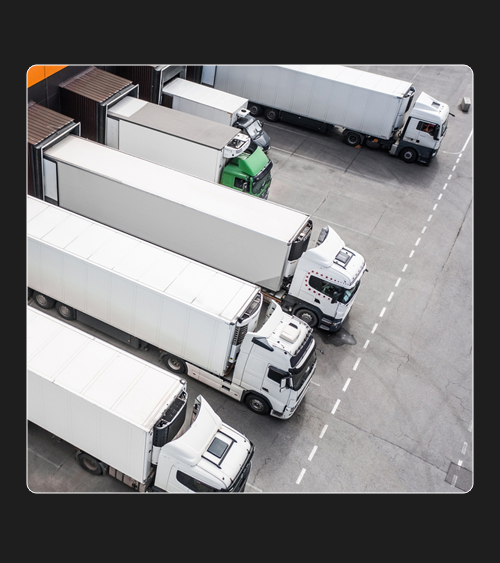
For too long, the term fleet has been used as a blanket label for very different industries. A fleet is more than a set of vehicles. It is a digital fleet management ecosystem, powered by data, people, assets and an increasing reliance on fleet management software. Whether moving goods, delivering services, operating shared mobility, or responding to emergencies, every fleet depends on performance, uptime and cost control. But how each achieves that, and the challenges they face, vary significantly.
Defining Europe’s fleet landscape
Fleets vary widely in size, mission, and operational complexity. Here’s a breakdown of the major segments in Europe:
- Haulage / HGV fleets – cross-border goods movement, time-critical operations and heavy compliance requirements.
- Delivery fleets – parcel, courier, food, pharma and last-mile operators running high-frequency van and LCV routes.
- Car-sharing & mobility fleets – rental and shared-vehicle operators requiring seamless digital access, authorisation, and control.
- Corporate & service fleets – utilities, telecoms, engineering, maintenance and retail fleets juggling multi-site operations.
- Emergency & municipal fleets – police, ambulance, fire, and local authority vehicles where reliability is non-negotiable.
Each of these segments faces unique operational pain points, but all share three universal challenges: fraud and unauthorised spend, poor visibility, and manual compliance. That’s why fleet management solutions and connected platforms are becoming mission-critical.
The push for fully connected fleets
Across Europe, fleet managers in HGV, delivery, service and car-sharing sectors face growing pressure to run cleaner, smarter, and more efficient operations. Predictive maintenance, AI-powered diagnostics, and integrated telematics are no longer optional; they’re foundational to modern fleet management.
The predictive maintenance market is set to jump from $10.93bn in 2024 to $70.73bn by 2032, while commercial telematics continues its double-digit expansion.
Despite these advances, one critical operational layer stubbornly refuses to keep pace: payments.
Digitally connected except at the point of payment
Telematics delivers deep visibility: real-time diagnostics, fuel and energy monitoring, route optimisation, and driver behaviour insights. Combined with predictive maintenance, these systems form the backbone of digital fleet management. In fact Analysts estimate the global fleet management market will reach around $30 billion in 2025, growing at approximately 16-17% annually, driven by rapid adoption of telematics and real-time analytics.
However, the moment a driver pays for fuel, charging, tolls, or parking, the visibility disappears. In-vehicle payments and other spend events often remain disconnected from telematics. This leaves fleets blind to the relationship between transactions, vehicle behaviour and operational context.
For fleets already managing:
- soaring maintenance costs
- a global technician shortage
- compliance pressure
- operational complexity
This means fragmented fleet expense management becomes a direct threat to uptime and cost control.
The hidden challenges of digital payments in modern fleets
Even fleets with advanced digital fleet management tools face persistent payment challenges:
- Zero real-time visibility – traditional fuel cards and legacy systems delay spend reporting, preventing operators from linking transactions to live telematics, meaning payment data arrives days or weeks late.
- High fraud exposure – shared cards, unauthorised use, and cloned cards cost fleets millions annually, particularly those with large driver turnover.
- Heavy administrative burden – receipt chasing, manual reconciliation, and multi-supplier billing waste time and resources.
- Disconnected systems – many payment processes operate outside fleet management software, blocking telematics payments integration and leaving insights on the table.
- EV-specific complexity – multiple charging networks, apps, and billing formats create unpredictable cost variation.
- No link between spend and behaviour – without integrated data, operators cannot trace unusual spend spikes to routes, driving patterns, or emerging vehicle faults.
For haulage fleets, this means cross-border compliance risk. For delivery fleets, this means thousands of small transactions that create reconciliation nightmares. For car-sharing operators, it means EV charging complexity and fraud exposure. For corporate fleets, it means VAT reclaim delays and governance headaches.
Payments: the next strategic layer in fleet intelligence
As fleets adopt unified systems for maintenance, telematics and operations, expectations around payments are shifting fast. The next wave of optimisation comes from fleet payment solutions that make spend as connected and intelligent as the vehicles themselves.
A unified fleet payment platform turns every transaction into a diagnostic signal, a live datapoint that supports accurate decision-making, fraud reduction and cost optimisation. This is especially critical when technician shortages stretch operational capacity and automation is needed to keep fleets moving.
What a connected fleet payment platform enables
The new generation of fleet payment apps and payment infrastructure embeds spend activity directly into each vehicle’s operational story: route, mileage, energy use, service timing, and driver context.
FleetWallet3 exemplifies this approach. Sitting on top of existing telematics with no extra hardware, it acts as both a digital fuel card alternative and a unified mobile fleet payments solution covering fuel, EV charging, parking, and tolls.
Deployed with GoCar in Ireland and CarPay Diem across 12 European countries, FleetWallet3 delivered:
- 2,000 transactions processed
- 500 misuse attempts automatically prevented
- 18% of suspicious transactions flagged
- ~€250,000 projected annual savings
This is unified fleet payments in action, where every transaction becomes intelligence.
2026: the year payments stop being friction and start being insight
Fleets are already investing in telematics, predictive maintenance, and electrification. Closing the payment visibility gap is the final step in achieving truly connected vehicle payments and a fully integrated fleet management ecosystem.
A modern, connected payment experience delivers:
- seamless driver journeys
- tighter cost control
- stronger fraud prevention
- richer operational insight
- automated reconciliation
- better utilisation of existing technologies
Connected payments transform everyday transactions into actionable intelligence, unlocking the full potential of digital fleet management.
Ready to close the final visibility gap in fleet operations? Watch this webinar or check out this demo to see how FleetWallet3 integrates connected payments into your digital ecosystem.