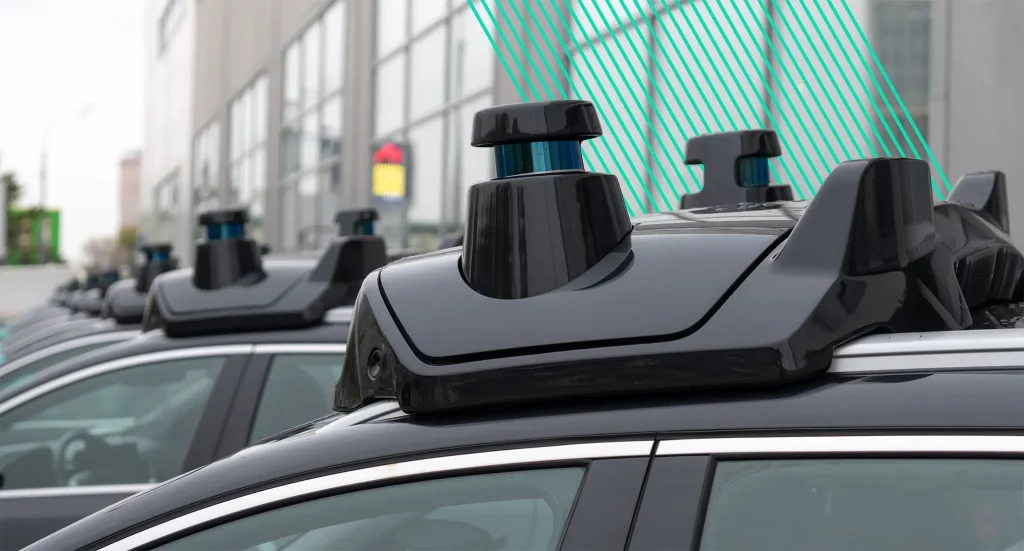
Robotaxis have started to appear on British roads, as Waymo kicked off trials across London’s streets. The Alphabet-owned operator has deployed a fleet of Jaguar I-PACE vehicles for supervised testing, a significant moment for Britain as it seeks to regulate and commercialise self-driving technology.
But robotaxis are more than a new way to get around. They are also a stress test for whether autonomous, software-defined vehicles can deliver consistently in the real world.
New research, commissioned by us with Censuswide, suggests that while Brits are ready to give robotaxis a chance, the quality of those first journeys will dictate whether the market takes off. Currently, nearly three in ten (29%) Brits actively plan to try a robotaxi when they arrive on British roads. But nearly three-quarters (73%) say a poor first experience would put them off trying them again.
Safety and connectivity top the list of concerns for robotaxis
While there are early signs of interest for robotaxis, there is still work to be done to win over the masses, with 49% admitting they are unlikely to try one if they became available in their area, and 50% saying they would be uncomfortable taking a journey in one.
A smooth, reliable experience would decide whether 82% of respondents would try a robotaxi again. But, as it stands, roughly a third (31%) think the initial robotaxi experience in UK pilots will match their expectations.
Practical concerns potentially preventing repeat robotaxi use include risk of accidents (50%), vehicle malfunctions or breakdowns (41%), being unable to get help in an emergency (35%), and losing in-car connectivity or signal during a journey (28%).
But public confidence won’t rest solely on sensors and cameras. The rider experience will also depend on what happens in the background: live connectivity to maps, diagnostics, fleet systems and support services.
Robotaxis – First impressions are everything
Among those worried about connectivity loss, top fears were the vehicle not knowing how to respond in unexpected situations (54%), not being able to navigate safely (49%), and not being able to contact emergency services easily (26%).
Security and data privacy round out the picture, raised by more than a quarter (26%) of those surveyed. As with safety and reliability, it reflects how much riders value knowing the vehicle and its systems can be trusted, which is something operators and their technology partners are designing for from the outset.
In-vehicle connectivity is key
Clearly, people are excited to try robotaxis. But that novelty will wear off fast if the experience is sub-par. Having a smooth, reliable experience from the outset will keep them coming back. That depends on robotaxis staying connected to networks, maps, diagnostics, and fleet management systems in real time. It’s why always-on connectivity is such an essential part of the puzzle for operators.
All eyes will be on London this year as Waymo and other operators test their wares on its busy and tricky streets. But if they get it right, the pay-off is huge. Once that trust has been built, operators won’t simply be able to make money from journeys. They will be able to introduce new in-vehicle digital services, from entertainment to personalisation, to boost their profit margins. But that can only come once the core journey feels safe and reliable, with connectivity built in throughout.
Ready to build the connectivity layer riders can trust?
See how DriverConnect keeps fleets connected from first ride to last and contact us today.