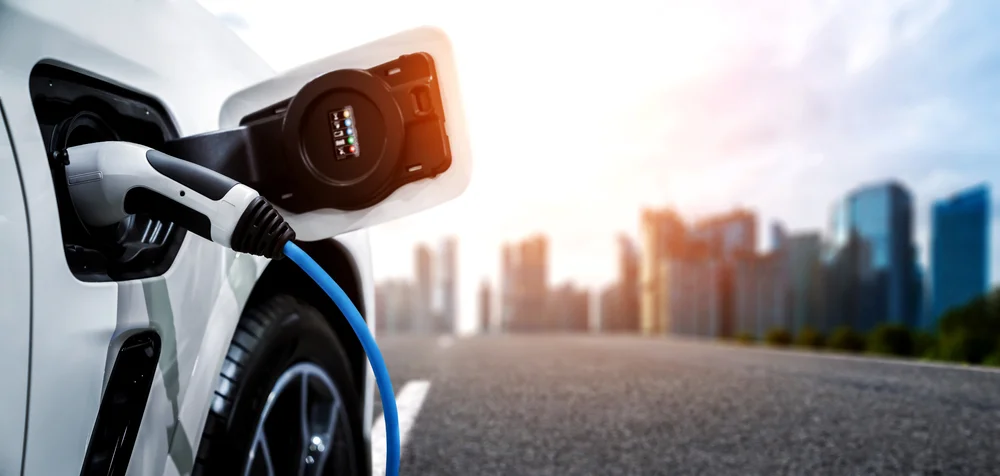
For decades, commercial vehicles powered by diesel engines have long been a major source of air pollution. The transportation sector has been one of the largest contributors to greenhouse gas emissions (GHG), generating 29% of total U.S. GHG emissions in 2019. But market trends indicate an acceleration towards zero-emitting freight trucks, urban buses and delivery vans that could revolutionise commercial electric vehicle (EV) fleets and drive business into the future.
By 2030, EVs will account for 40% of global new car sales. Sales reached 2.1 million globally in 2019, with consumer adoption growing. Battery electric vehicles (BEVs) now make up 1.8% of light-duty vehicles sold in the U.S. While established players like Tesla continue to set new industry standards, large shipping companies are also recognising the value in electrifying their fleets. Electrification offers a lower total cost of ownership and compliance with clean energy mandates. Technology companies like Arrival are meeting these demands with innovative approaches to the commercial EV market.
A new era for commercial EV fleets
Arrival’s modular-designed EVs represent the next generation of electric vehicles, offering improved pricing, design, and efficiency over traditional diesel vehicles. What sets them apart is their intelligent connected software, which allows fleet vehicles to send and receive vital data as part of a larger connected transport ecosystem. Arrival’s cloud-based vehicle monitoring combines over-the-air (OTA) provisioning with advanced analytics to give drivers real-time data on the road, ensuring more efficient operations.
As e-commerce demand surged during the Covid-19 pandemic, companies like Arrival began targeting last-mile parcel delivery with solutions that offer improved shared mobility. Arrival has already secured a contract with UPS to provide up to 10,000 electric vehicles, and the company is working with Uber to design an affordable, purpose-built electric vehicle for ride-hailing services.
Arrival’s ‘Microfactory’ of the future
While other major automotive manufacturers like Stellantis and Renault-Nissan have plans for their own electrified delivery vehicles, Arrival is taking a different approach when it comes to fleet production by reinventing the factory. Instead of the conventional large-scale production lines, Arrival’s microfactories use cell-based assembly methods and require far less space – just 10,000 square metres, compared to Tesla’s 5.3 million square foot factory in California.
These customisable microfactories can be integrated into urban centres and cost around $50 million, significantly less than the $1 billion typically required for traditional plants. Arrival’s long-term goal is to set up microfactories across the globe and eliminate the need to ship vehicles — a costly segment of the supply chain that is especially harmful to the environment. This localised production model reduces both emissions and costs, making Arrival’s strategy a game-changer in the commercial EV space.
The next step in EV evolution: commerical fleets
While Tesla has made electric vehicles cool for consumers, mass adoption by commercial fleets represents the next phase in the EV industry’s evolution. Automakers are increasingly looking to capitalise on the opportunities presented by sustainable and cost-effective solutions in the global transport and logistics sectors. As electrification becomes more mainstream, the demand for connected software solutions that can streamline operations, improve efficiency and drive down costs will continue to grow.
Connected software: the key to success
Cubic3’s connected software and analytics solutions give manufacturers and fleet managers the tools they need to thrive in this new era. Our solutions provide real-time data, seamless connectivity and advanced analytics that help commercial fleets optimise performance and efficiency.