


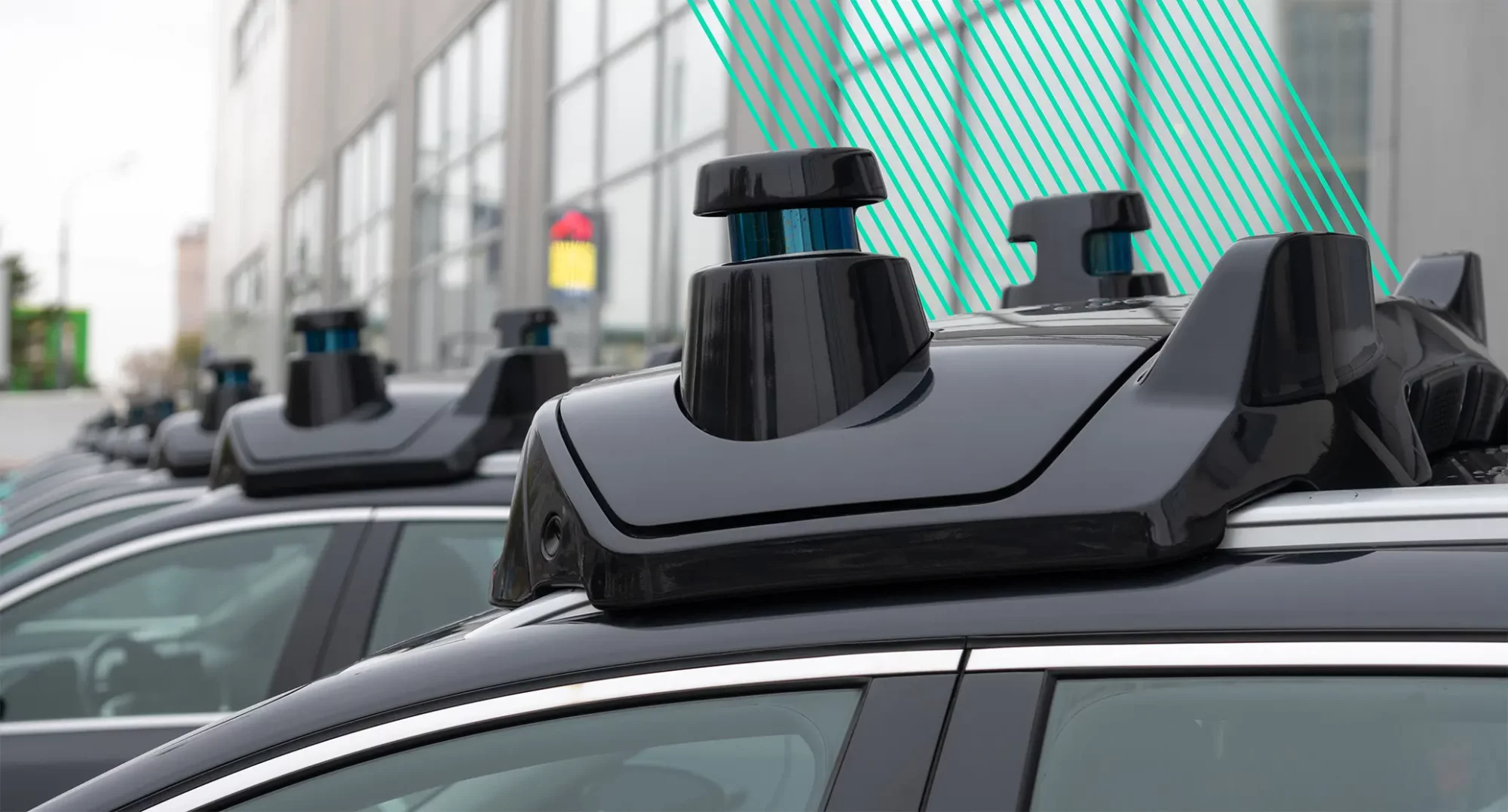

Waymo has made the sharpest technical case yet against camera-only autonomy, and the economics of the sensor stack are shifting underneath the argument as it happens.
The longest-running argument in autonomous driving got a fresh airing in early August, when Waymo co-CEO Dmitri Dolgov told a Y Combinator Startup School audience that camera-only systems hit a safety ceiling long before they reach full autonomy. He never named Tesla. He did not have to.
The debate matters far beyond the two companies at the centre of it, because the sensor decision sets the cost, the complexity and the deployment speed of every robotaxi that follows.
The case against cameras alone
Dolgov’s argument was precise, and it conceded the obvious point first. Humans drive with two eyes, so cameras are proof that vision alone can produce a competent driver. If the target is roughly human-level performance or a driver-assistance product, he accepted that a camera-only stack is a reasonable way to build it.
The target for a driverless robotaxi is not human-level, though. It is strongly superhuman, and that is where he drew the line: weak sensing, he said, leads to a safety curve that flattens out way too early.
The physics behind that claim is hard to argue with. Cameras are passive sensors that need light and contrast to work, and they degrade in darkness, glare, dust and heavy rain. Lidar and radar are active: they generate their own signal, measure 3D structure and velocity directly, and keep working in conditions that blind an image sensor. Waymo’s anchor example was a dust storm in Phoenix where the camera feed showed almost nothing and lidar picked out a pedestrian at the roadside.
The deeper point is about the tail rather than the average. Every additional nine of safety, from 99% to 99.9% to 99.99%, costs roughly ten times the effort of the last one, and the modalities that seem redundant in normal conditions are the ones that earn their place in the last decimal place. A leaf on a lens is not an edge case when you run tens of thousands of vehicles.
Why the camera-first camp keeps gaining ground
The counter-argument has moved on from the one Musk made in 2019, and it is no longer really about sensors at all. It is about what the models can now do with the data those sensors produce.
End-to-end and vision-language-action architectures learn driving behaviour directly from video, rather than feeding a hand-built perception pipeline that depends on geometric ground truth. As the models absorb more of the perception task, the marginal value of an extra modality falls. XPeng dropped lidar with the P7+ in November 2024 and has reaffirmed pure vision with every model since, with He Xiaopeng arguing that lidar remains valuable in other industries but is no longer necessary in cars. Tesla now runs commercial driverless service across cities in Texas and Florida on a camera-only stack with no HD map dependency, and mapless operation is precisely what lets it switch on a new metro in weeks rather than quarters.
The commercial pull is just as strong as the technical one. Stripping modalities out of the vehicle removes more than the parts:
- A lighter bill of materials, and one less supply chain to secure at scale
- Less calibration, cleaning, thermal management and wiring, which means fewer service points and less downtime
- Less fusion compute, and a simpler path to porting the stack onto a new vehicle platform
- Faster iteration, because improvements ship as a model update rather than a hardware revision
For a business whose unit economics live or die on vehicle cost and utilisation, none of that is a rounding error.
The cost argument has already moved
Here is the part that gets lost in the noise. The strongest historical case for camera-only was cost, and that case is weakening every quarter.
Long-range lidar in China has fallen from around $4,350 per unit to roughly $145-200, and Hesai is shipping its ATX at about $200 against an order book of more than four million units. Dolgov’s response to the cost objection was that it is a number with a fairly short shelf life, and the pricing curve is proving him right. A sensor heading for the price of a premium headlamp is not the thing standing between a robotaxi fleet and profitability.
The multi-sensor camp is not standing still on cost either. Waymo’s sixth-generation Driver cut sensor count by 42%, down to 13 cameras from 29, four lidar and six radar, at hardware cost reported below $20,000 per unit and more than half the previous generation. Pony.ai took roughly 70% out of the bill of materials with its Gen-7 platform. Sensor-heavy no longer means hardware-heavy.
The sensor stack is thinning everywhere. The disagreement is not about direction. It is about where the floor sits.
The metric that settles it isn’t the bill of materials
A robotaxi earns money when it is moving with a passenger in it. Sensor cost is a one-off; lost availability is recurring, and it is the recurring number that decides whether a city is profitable.
That reframes the whole debate around cost per reliable passenger mile. How many hours does the fleet lose to weather it cannot operate in? How often does a vehicle escalate to a remote operator, and how many operators does that require per hundred cars? How much service time goes on recalibration? How large can the operating domain be before the tail risk becomes uninsurable? Every one of those questions has a sensor answer, and none of them appears on a bill of materials.
This is why the current expansion phase is so informative. Camera-only service in Florida humidity and summer storms tests exactly the conditions where passive sensing is weakest, and multi-sensor fleets have had their own weather-driven suspensions. The next two years of operating data, not the next two years of argument, will do the deciding.
Where the robotaxi sensor debate probably lands
The likely outcome is not a winner. It is a dial. The sensor set will be tuned per operating domain and per market, with leaner configurations in benign, well-mapped, geofenced environments and more sensing retained where weather, light and road behaviour are less forgiving. A fleet running Phoenix and Munich will not necessarily run the same hardware in both.
The direction of travel is clear enough. Models keep taking over more of the perception task, camera resolution and dynamic range keep improving, and the sensor count keeps falling across every camp in the market. What is less obvious is that falling lidar prices cut against the pure-vision case as much as improving models cut against the multi-sensor one. When the part costs $150, removing it stops being a strategic decision and becomes an engineering preference.
The more consequential shift is where capability now sits. It is migrating out of the hardware and into the model, the data pipeline and the fleet that feeds it. The winning robotaxi platform will be the one that learns fastest from the miles it drives, whatever it happens to be looking through.
What this means for the fleets in between
Both architectures land in the same place on one point. A camera-first stack improves through the video its fleet collects and the model updates it ships back, and a mapless vehicle leans harder on remote assistance when it meets something it has not seen before. A multi-sensor stack generates more data and pushes more map and model updates to more vehicles. Either way, the vehicle is only as good as the connection carrying that traffic, and that connection has to hold in every market the fleet operates in.
At Cubic3, our work in automotive-grade IoT connectivity puts us alongside the teams making these decisions, from multi-network global coverage and QoS prioritisation through to data residency and eUICC-based fleet provisioning across markets. The sensor debate will resolve itself in operating data. The connectivity underneath it has to work whichever way it goes.


