


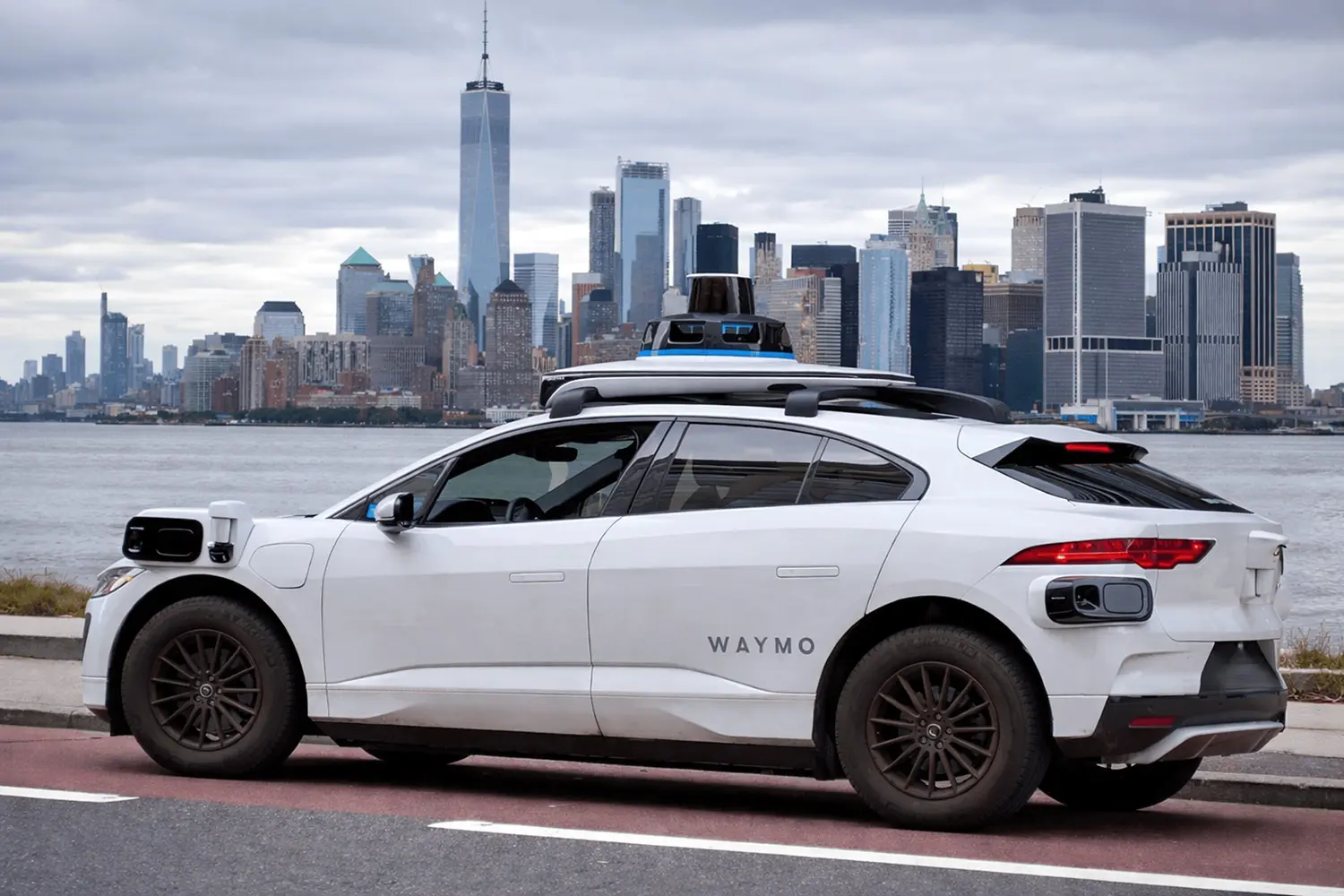

The autonomous vehicle has arrived, but the layer making it legally possible has received almost none of the attention: robotaxi connectivity.
Waymo is carrying over 500,000 paying passengers every week across San Francisco, Phoenix, and Los Angeles. WeRide is operating in ten countries across three continents. Baidu Apollo Go has surpassed 22 million ride services globally. Pony.ai, Mobileye, and MOIA are scaling commercial deployments across the US, Middle East, and Europe.
The technology that drives these vehicles, the AI models, the LiDAR sensors, the onboard compute, has received most of the attention. But there is a layer beneath all of it that receives almost none, and without which none of it is legally or operationally possible.
That layer is connectivity. It is also, as our UK consumer research found, directly tied to whether riders trust the experience enough to ride again.
Why Connectivity Is Not Optional
Every L4 autonomous vehicle operating commercially today is required, in most markets, to maintain a live connection to a remote human operator at all times. Depending on the fleet, this takes the form of teleoperation, direct control of the vehicle from a remote location, or remote assistance, where a human provides guidance rather than driving inputs. Neither is a temporary workaround for immature technology. Both are deliberate safety architectures mandated by regulators precisely because even the most advanced AI systems encounter situations they cannot handle alone.
Waymo’s system is a remote assistance model rather than direct teleoperation. When a vehicle flags uncertainty at a complex junction in San Francisco, an operator watching a live HD video feed provides contextual guidance, not driving inputs, and the vehicle handles the manoeuvre itself. The passenger notices nothing. That exchange, the video stream from the vehicle, the guidance back to it, still depends entirely on a live cellular connection, with round-trip latency of around 150 milliseconds domestically and up to 250 milliseconds for cross-border links.
If either connection drops, the vehicle stops or defaults to a safe state. In most markets, operating without it is not permitted.

The Data Demands Are Significant
Teleoperation and remote assistance are two of ten distinct operational functions that an L4 robotaxi fleet runs over cellular simultaneously. Each has different bandwidth, latency, and reliability requirements.
Safety-critical telemetry, braking events, sensor anomalies, system faults, streams continuously to the operations centre in real time. HD map updates push road changes and newly appeared obstacles to the vehicle’s 3D map in near real time. AI model updates are delivered wirelessly to entire fleets overnight. Fleet dispatch, ride management, charging coordination, incident reporting, and regulatory compliance data all flow continuously in the background.
A single vehicle in active operation generates approximately 10 gigabytes of data per minute from its sensor suite. Teleoperation control signals, direct driving control rather than advisory guidance, must reach the vehicle in under 20 milliseconds, the window within which a human response remains meaningful. Connection uptime requirements sit at 99.99% or above. A dropped connection mid-ride is not a service inconvenience. It is a safety event with direct regulatory implications.
These are not consumer-grade requirements. They are fundamentally different from the demands that standard mobile connectivity was designed to meet.
The QoS Gap the Industry Has Not Solved
What makes this problem commercially significant is the absence of an established connectivity framework designed for it. The current QoS landscape, consumer best-effort tiers at one end, emergency service prioritisation at the other, leaves AV safety-critical traffic without a natural home.
Teleoperation video and control commands require guaranteed delivery, isolated from consumer traffic that competes for the same bandwidth during peak urban hours. Safety telemetry requires zero tolerance for packet loss. Incident reporting must be transmitted reliably even in the congested network environments that form around accident sites.
The 5G capabilities that address this, URLLC for sub-10ms guaranteed latency, network slicing for dedicated QoS isolation, and MEC to process data at the cell tower rather than a distant cloud, are precisely the features that production-grade robotaxi connectivity requires. The operators who can deliver these capabilities with contractual guarantees, not aspirational roadmaps, are the connectivity partners that AV fleet operators will build long-term relationships with.
The Global Dimension
The connectivity challenge compounds significantly as AV fleets expand internationally. WeRide operates across China, the UAE, Saudi Arabia, Singapore, and Switzerland simultaneously. Pony.ai spans four continents. Every new market means a different mobile operator, a different level of 5G maturity, different permanent roaming regulations, and different data residency laws governing where vehicle and passenger data can be processed and stored.
A robotaxi operating in Saudi Arabia cannot stream passenger data to a server in the US. A vehicle fleet expanding from China into Europe needs SIM profiles that comply with local breakout requirements without requiring physical SIM replacement across thousands of vehicles. Managing this across markets requires a connectivity platform that treats global operation as the default architecture, not as a collection of regional workarounds stitched together market by market.
What Automotive-Grade IoT Connectivity Delivers
The requirements that AV fleet operators bring to connectivity engagements are significantly more demanding than those of any other IoT deployment category. Automotive-grade SIM hardware must operate reliably across extreme temperature ranges and constant vibration for ten years or more. Multi-network global coverage must be managed from a single platform, with dynamic network selection ensuring the vehicle always connects to the strongest available network. Remote SIM provisioning must allow profile management across fleets of thousands without physical intervention. And uptime commitments must be contractual, not best-effort targets, aligned to the safety-critical nature of what the connection is supporting.
These requirements define a connectivity category distinct from consumer mobility, standard enterprise IoT, and conventional automotive telematics. The robotaxi market needs connectivity infrastructure built specifically for its demands, and the providers who understand those demands at a technical and operational level are the ones who will earn a place in this ecosystem as it scales.
At Cubic3, our deep expertise in automotive-grade IoT connectivity positions us to support the unique demands of autonomous vehicle deployments, from QoS prioritisation and multi-network management to global compliance and eUICC-based fleet provisioning.
According to industry analysis from the 5G Automotive Association, converging network and automaker timelines for URLLC-grade infrastructure remains one of the sector’s central technical challenges.
If you are working through the connectivity requirements of an autonomous vehicle programme, or exploring how to position connectivity infrastructure for this market, we would welcome the conversation.
Speak to the Cubic3 team to explore how our connectivity platform addresses the specific demands of autonomous vehicle and advanced mobility deployments.


